Spray Polyurethane Foam Roofing · Lic #C-2-1052735
Spray foam roofing, start to finish
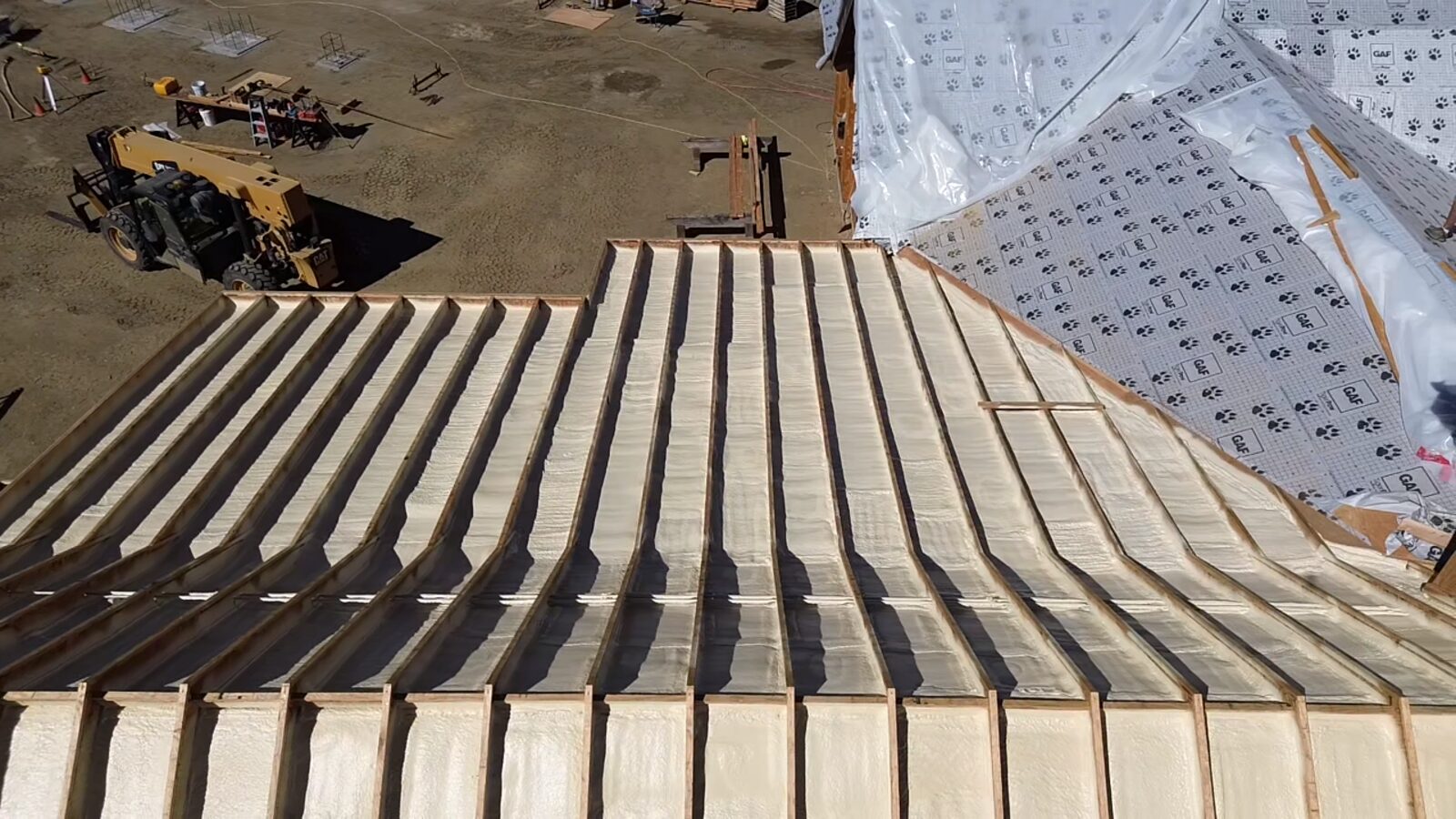
A spray polyurethane foam (SPF) roof starts as two liquid components that meet in the spray gun. Sprayed onto a sound roof deck they rise into a solid, seamless foam layer that insulates and waterproofs at the same time, and a bright elastomeric topcoat goes over it to take the sun. Because the foam is liquid when it lands, it fills and self-flashes around vents, curbs, skylights and parapets — the penetrations that leak first on every other roofing system.
What it goes over
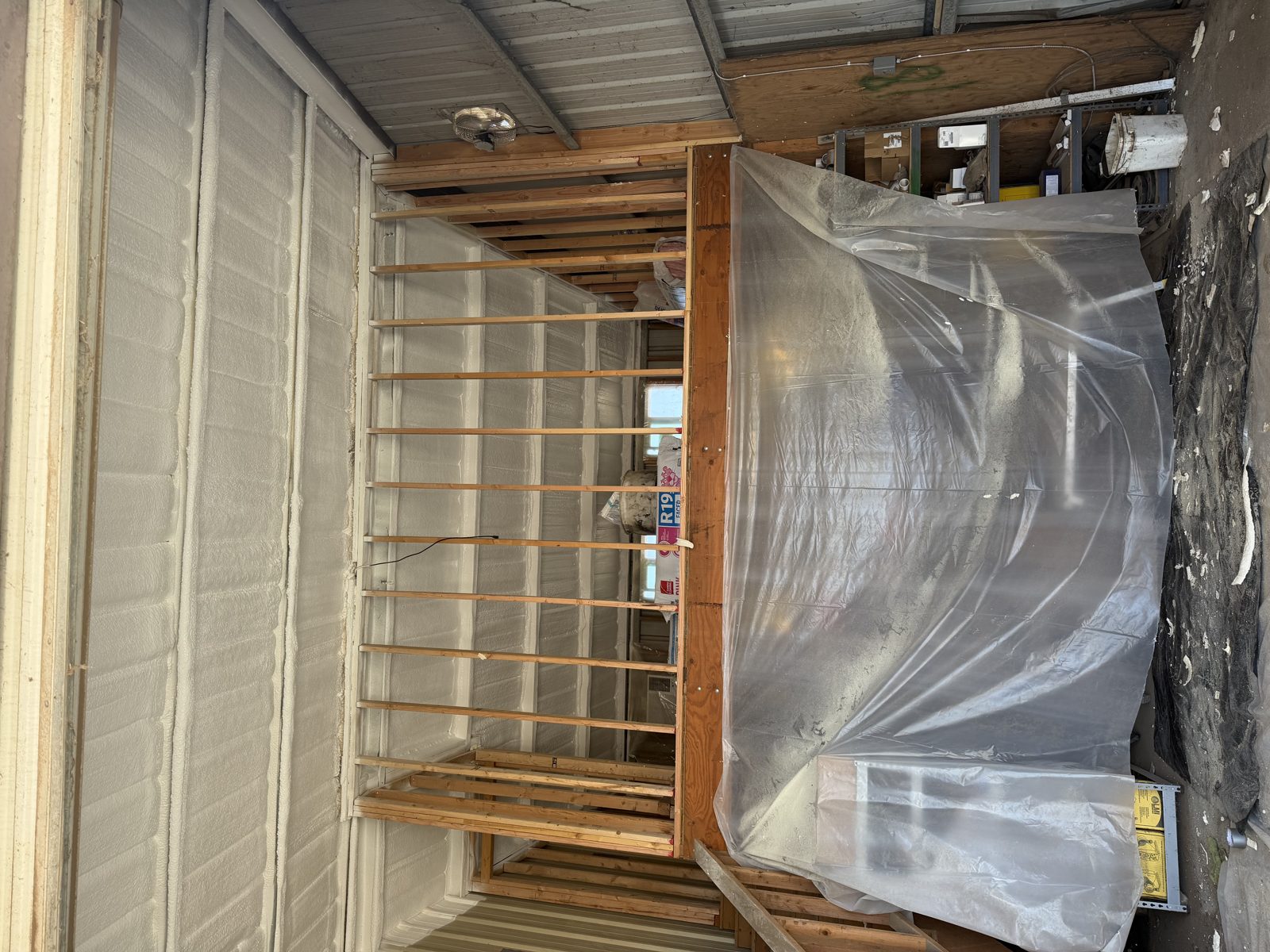
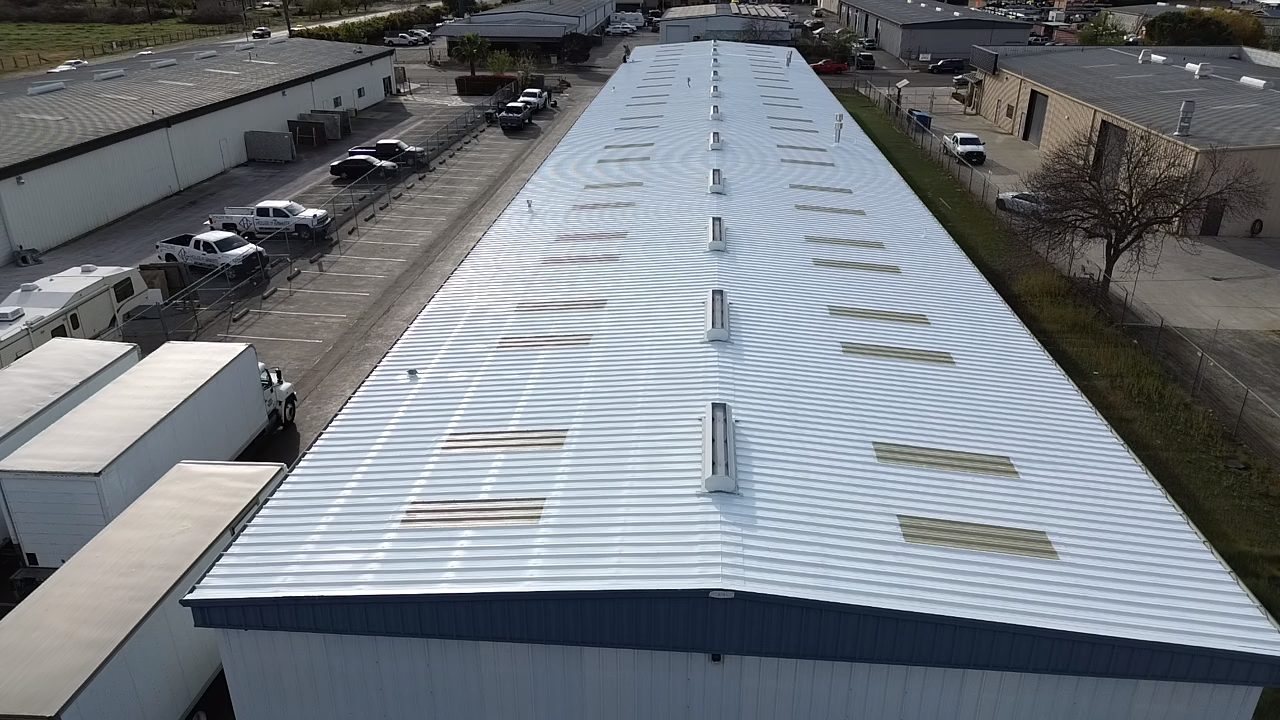
Spray foam roofing fits the buildings the Central Valley actually has. Flat commercial roofs — retail, warehouses, offices — get a full seamless foam-and-coat system over the existing roof in sound condition. Metal buildings — shops, barns, packing sheds — get rust treatment, fastener and seam work, then foam over the panels, which also stops the panel drumming and condensation. Ag and food-processing buildings — dairies, cold storage, processor floors — get the same seamless system already running on Valley dairies like the Corcoran job pictured above.
Not every roof qualifies, and we will say so plainly before we quote. A roof whose problems are structural — saturated insulation, a rotted deck, a membrane past its mechanical life — needs more than foam, and we would rather tell you that than spray over a problem.
How a foam roofing project runs
1. Look at the roof
We assess the roof before we quote — condition, drainage, penetrations — and tell you honestly whether it's a foam candidate or needs something else. Free drone survey, and we bid within 48 hours.
2. Clean and repair
The roof gets pressure-washed and any seams, blisters, fastener heads or drainage problems get repaired on the clean surface. Foam goes over a roof that's ready for it, not over dirt and damage.
3. Foam, then coat
The foam goes down at the thickness the roof and the building's insulation needs call for, then the reflective elastomeric topcoat goes over it. No tear-off, and the deck is never exposed.
4. Warranty and recoat
Our roof systems using General Coatings materials carry manufacturer NDL (No Dollar Limit) warranties. Down the road, the same roof gets washed, repaired and recoated rather than replaced.
What it costs
Most commercial foam roofing projects run $4–8 per square foot installed, depending on foam thickness and roof condition — usually well under tear-off and replacement, because there is no tear-off: no dumpsters, no deck exposure, no weeks of weather risk. We measure the actual roof with a free drone survey and bid within 48 hours, so the number you get is the roof you have, not a guess.
Every quote comes from the owner. When you call, you're reaching the company that does the spraying.
Spray foam roofing FAQ
How long does a spray foam roof last?
Installed right, it is the last roof that roof ever needs: the system is maintained by recoating every 10–20 years, which resets the roof's life rather than replacing it.
Can you foam a metal shop, barn or dairy building?
Yes, if the panels are structurally sound. We treat rust, fasteners and seams first, then foam over the panels — which also quiets drumming and stops condensation drip inside metal buildings.
Will it hold up to Valley heat, wind and rain?
Yes — a foam roof is one continuous bonded surface with no laps or fastener lines, and the elastomeric topcoat is the sacrificial layer that takes the sun.
Who do I call?
Roofing projects: (559) 648-8508. Emergencies, 24/7: (559) 739-9519. Or send the form on our contact page and we'll call you back.
Get a free estimate
Allstate Spray Foam Insulation & Roofing Inc
1133 E Houston Ave, Visalia, CA 93291
Main (559) 739-9519 · Roofing (559) 648-8508